

Before the rise of Islam in the 7th century CE, the Arabian Peninsula was home to many tribes, trading cities, and ancient cultures. This period is often called Pre-Islamic Arabia or the Age of Jahiliyyah, meaning the “Age of Ignorance.” However, despite conflicts and tribal wars, Arab society also developed rich poetry, trade networks, and cultural traditions.
Geography of Ancient Arabia


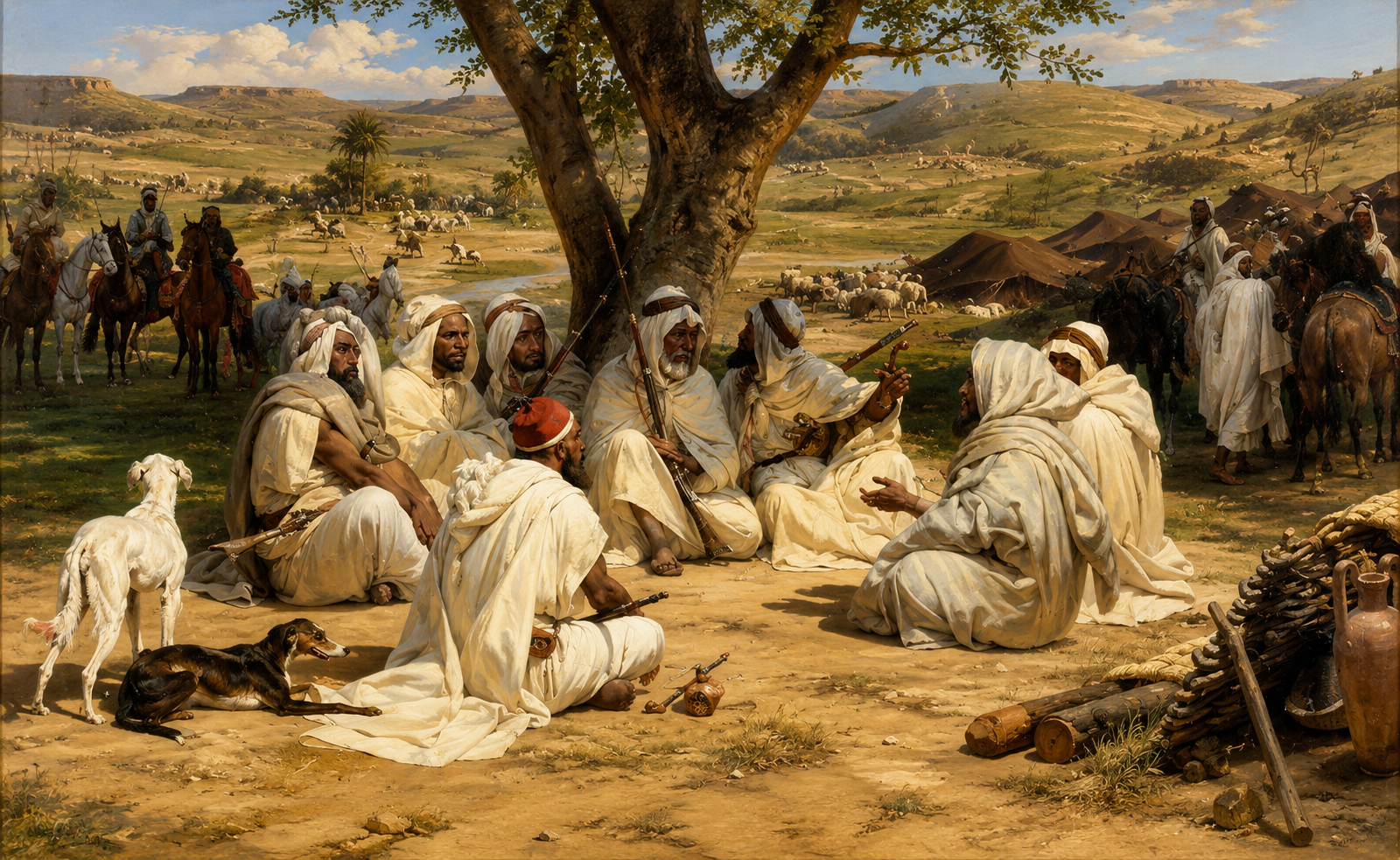
The Arabian Peninsula was surrounded by deserts, mountains, and coastal regions. Because of the harsh climate, many Arabs lived as nomadic tribes known as Bedouins. They moved across the desert with camels, sheep, and goats in search of water and pasture.
Important regions included:
- Hejaz — home to cities like Mecca and Medina
- Yemen — famous for agriculture and trade
- Najd — central desert region
- Oman and Bahrain — connected to sea trade routes
The desert environment made tribal loyalty extremely important for survival.
Tribal Society


Arab society was based on tribes and clans. Each tribe had its own leader called a Sheikh. Loyalty to the tribe was considered more important than almost anything else.
Main Features of Tribal Life
- Strong family and tribal bonds
- Frequent tribal wars and raids
- Honor and bravery were highly respected
- Poetry was an important form of communication
- Hospitality toward guests was admired
Revenge between tribes sometimes continued for generations.
Religion Before Islam
Before Islam, most Arabs practiced polytheism and worshipped many gods and idols. The city of Mecca contained the Kaaba, which housed numerous tribal idols and was an important religious center.
Some famous idols included:
- Hubal
- Al-Lat
- Al-Uzza
- Manat
However, not all Arabs were polytheists. There were also:
- Christians
- Jews
- Zoroastrians
- Hanifs (people who believed in one God)
The Kaaba was already considered sacred long before Islam.
Trade and Economy


Trade played a major role in Arabian life. Since Arabia connected Asia, Africa, and Europe, Arab merchants became skilled traders.
Major Trade Goods
- Spices
- Incense
- Leather
- Silk
- Perfumes
- Gold and silver
Mecca became wealthy because of caravan trade routes connecting the Byzantine and Persian empires.
Poetry and Culture
Poetry was one of the greatest achievements of pre-Islamic Arabs. Poets were highly respected because they preserved tribal history, praised heroes, and criticized enemies.
Famous poetry competitions were held in markets such as Ukaz. Some of the best poems were called the Mu’allaqat, meaning “The Hanging Poems.”
Arab culture valued:
- Courage
- Generosity
- Loyalty
- Eloquence in speech
Women in Pre-Islamic Arabia
The status of women varied among tribes. Some women had influence in business and society, while others faced harsh treatment.
In certain tribes:
- Women could own property
- Some participated in trade
- Others had very limited rights
Female infanticide, the killing of newborn daughters, existed in some areas and was later strongly condemned in Islam.
Major Kingdoms Before Islam


Several important Arab kingdoms existed before Islam:
Kingdom of Saba
Located in Yemen, famous for wealth and the Marib Dam.
Nabataeans
An Arab civilization known for the city of Petra and trade networks.
Ghassanids
Arab Christian allies of the Byzantine Empire.
Lakhmids
Arab kingdom allied with the Persian Empire.
These kingdoms helped connect Arab culture with neighboring civilizations.
The Coming of Islam
By the 7th century CE, Arabia faced social division, tribal conflicts, and religious fragmentation. In this environment, Prophet Muhammad began preaching Islam in Mecca around 610 CE.
Islam transformed Arabian society by:
- Promoting monotheism
- Ending tribal divisions
- Encouraging justice and equality
- Expanding education and literacy
Within a few decades, Islam united much of Arabia under one faith.
Conclusion
The history of Arabs before Islam was rich and complex. Ancient Arabia was not only a land of deserts and tribes but also a center of trade, poetry, and culture. Understanding pre-Islamic Arabia helps explain how Islam emerged and rapidly changed the history of the Middle East and the world.