Our Location
304 North Cardinal St.
Dorchester Center, MA 02124

Introduction
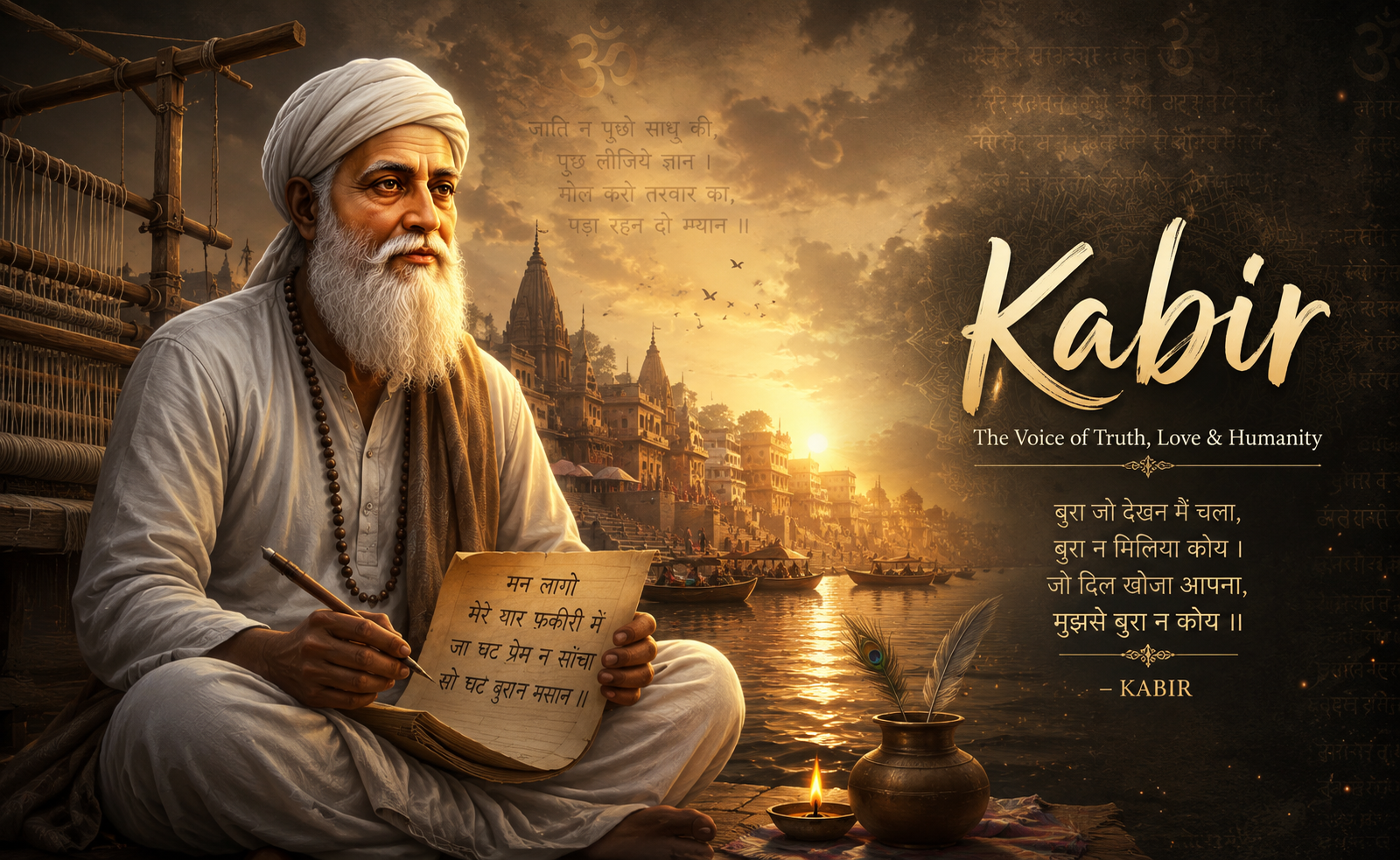
Kabir stands out as one of India’s true mystic poets—a man whose words still echo centuries later. He didn’t just write powerful poetry; he shared clear wisdom about love, unity, and truth. Kabir pushed people to look for God in their own hearts, not in rituals or empty traditions. He questioned religious boundaries and tried to bridge gaps people kept drawing between themselves.

Even today, millions around the world turn to Kabir’s poems for inspiration.
Early Life of Kabir
Kabir was born in 15th-century India, probably in the city of Varanasi. Most stories say he grew up in a humble Muslim weaver family—Niru and Nima raised him. The details of his birth are pretty murky, tangled in legend, but that never really mattered. What stood out was Kabir’s spiritual insight, even though he never had much formal education.
He spent his days weaving by hand and his nights weaving ideas—writing down poems and songs packed with meaning.
Kabir and the Bhakti Movement
Kabir’s influence on the Bhakti Movement can’t be overstated. This was a time when people started focusing more on personal devotion to God, rather than getting stuck in rituals or worrying about caste.
He called out both Hindu and Muslim leaders for their hypocrisy. Kabir believed everyone was equal and that God doesn’t fit inside religious boxes, castes, or social divisions.

He pushed for a few things above all:
Kabir’s Poetry
Kabir wrote short, punchy poems called Dohas. He didn’t bother with fancy words—his language was plain, so anyone could get the message. Maybe that’s why his verses spread so fast.
One of his most famous lines goes:
“Kal kare so aaj kar,
Aaj kare so ab.”
Or, in simple terms: Don’t put off your work. Act now.
Another classic:
“Bura jo dekhan main chala,
Bura na milya koi.”
He’s saying—look at your own faults before you start pointing fingers at others.
People still sing his poems across India, using them as songs of devotion.
Philosophy and Teachings
Kabir believed God lives inside each of us. He rejected superstition, blind faith, and discrimination. You could sum up his philosophy like this:
Influence on Society
Kabir left a mark on Indian spirituality and writing that’s tough to match. His followers eventually formed the Kabir Panth, a spiritual community that’s still alive today. He inspired other thinkers and saints—Guru Nanak, who founded Sikhism, was one of them. In fact, you’ll find Kabir’s verses in the Sikh holy book, the Guru Granth Sahib.

Legacy of Kabir
Kabir’s words haven’t faded at all. They still push people toward peace, humanity, and truth, encouraging them to look beyond hatred and religious conflict. Schools, musicians, and spiritual teachers study his work. His message—that love and wisdom cut deeper than division—still matters.
Conclusion
Kabir was more than just a poet. He was a revolutionary, a thinker who fought against injustice and religious divisions. With poetry that cuts straight to the heart, he showed people that truth, love, and equality really matter.
His teachings keep inspiring people to live with humility, compassion, and awareness. Centuries later, Kabir’s voice still shines as one of the strongest and clearest in Indian history.
