One of Philosophy’s Greatest Questions
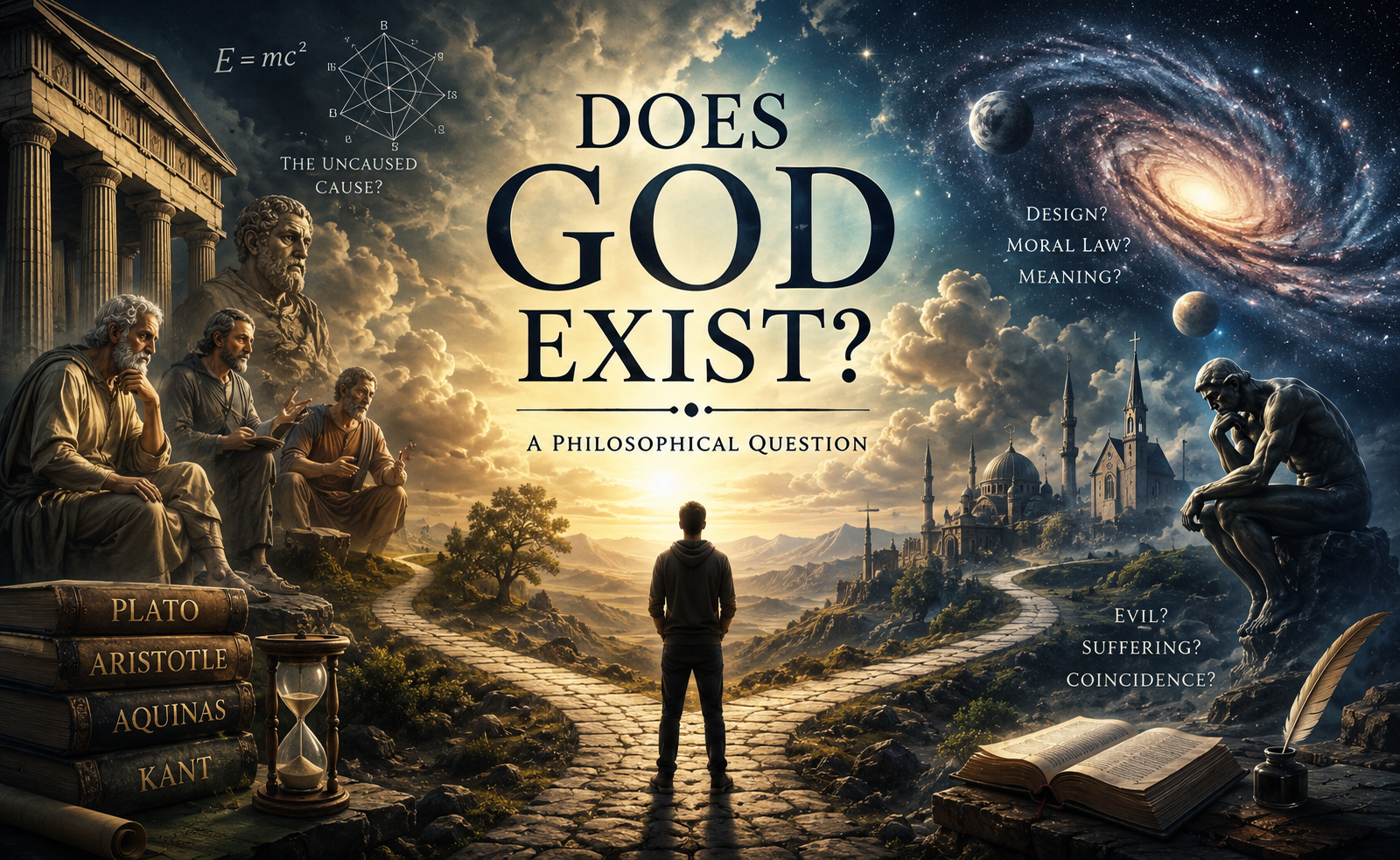
For thousands of years, humanity has asked one powerful question: Does God exist? Philosophers, scientists, religious thinkers, and ordinary people have debated this mystery across civilizations. From ancient temples to modern universities, the question continues to shape ethics, science, culture, and human identity.
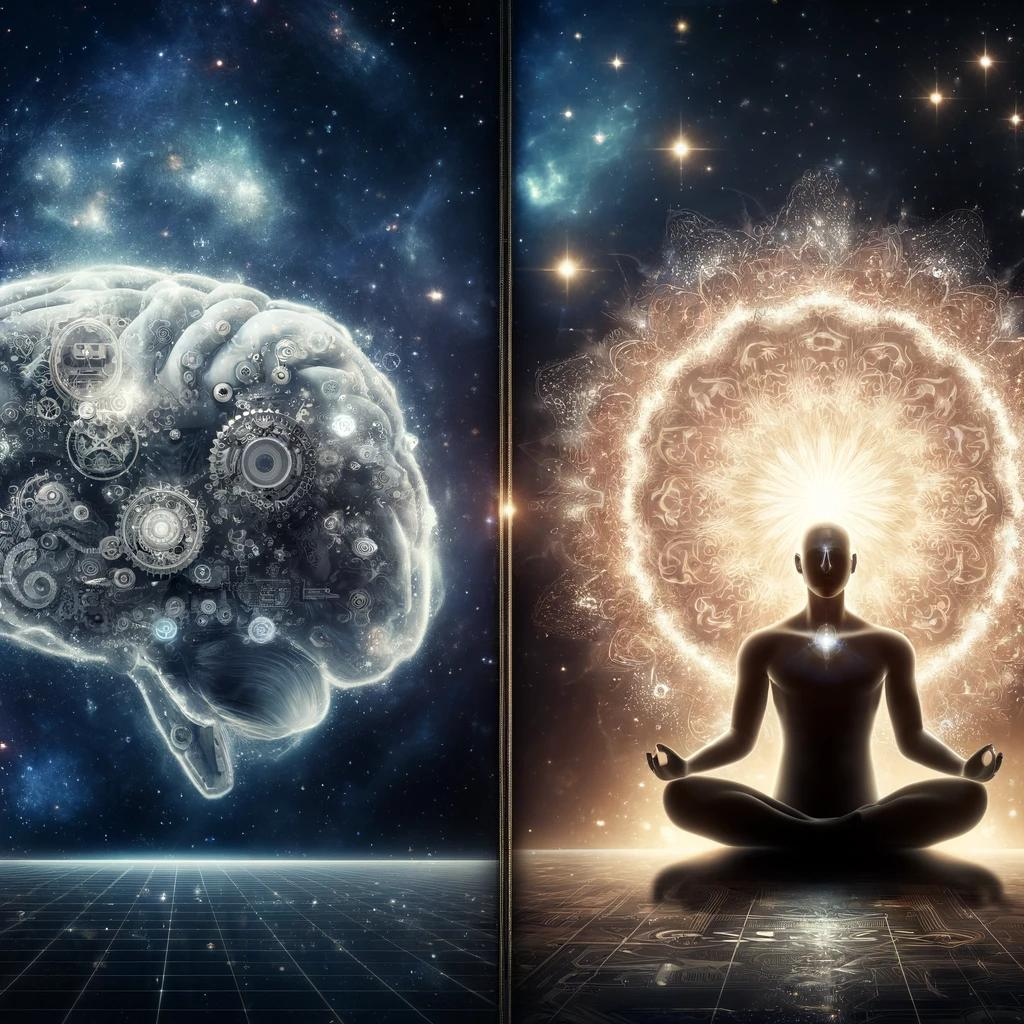


Some people believe God is the creator of the universe and the source of morality and meaning. Others argue that there is no evidence for a divine being. Between these positions are agnostics, who believe the truth may be unknowable.
This article explores the major philosophical arguments for and against the existence of God.
What Does “God” Mean? 🌌
Different religions and philosophies describe God differently. In philosophy, God is often understood as:

- All-powerful
- All-knowing
- Eternal
- Creator of the universe
- Morally perfect
Religions such as Christianity, Islam, and Judaism usually describe God as a personal being who interacts with humanity.
Some philosophers, however, view God more abstractly — as a universal force, consciousness, or the foundation of existence itself.
The Philosophical Arguments for God ✨
1. The Cosmological Argument
This argument asks:
“Why does anything exist at all?”
Philosophers like Thomas Aquinas argued that every effect has a cause. Since the universe exists, something must have caused it. That “first cause” is called God.
The logic is often summarized like this:
- Everything that begins to exist has a cause.
- The universe began to exist.
- Therefore, the universe has a cause.
Many believers connect this idea with the beginning of the universe in modern cosmology.



2. The Design Argument
The universe appears incredibly ordered and complex. Supporters of this argument believe such precision suggests an intelligent designer.
Examples include:
- The laws of physics
- DNA structure
- The balance of nature
- Human consciousness
Philosopher William Paley famously compared the universe to a watch: if you find a watch, you assume someone designed it.
Today, some people connect this argument to the fine-tuning of the universe.
3. The Moral Argument ⚖️
Why do humans believe murder is wrong or kindness is good?
Philosophers like Immanuel Kant argued that objective morality may require a higher moral source — God.
According to this view:
- Moral laws exist
- Moral laws need a lawgiver
- Therefore, God exists
Believers argue that without God, morality becomes subjective.
Arguments Against the Existence of God 🧠
1. The Problem of Evil
This is one of the strongest arguments against belief in God.
Philosopher Epicurus asked:
If God is all-powerful and good, why does evil exist?
People point to:
- Wars
- Disease
- Natural disasters
- Human suffering
Critics argue that a loving and all-powerful God would prevent unnecessary suffering.


Religious thinkers often respond by saying suffering may exist because humans have free will or because suffering helps create spiritual growth.
2. Lack of Scientific Evidence
Some atheists argue there is no measurable evidence for God.
Philosophers and scientists such as Bertrand Russell believed extraordinary claims require strong evidence.
Modern science explains many things once attributed to divine action:
- Evolution explains biological diversity
- Physics explains planetary motion
- Neuroscience studies consciousness
Because of this, some believe God is unnecessary as an explanation.
3. Contradictions Between Religions
Different religions describe God differently. Critics ask:
- Why are there many religions?
- Why do sacred texts disagree?
- Which religion is correct?
This diversity causes some philosophers to doubt all religious claims.
Agnosticism: The Middle Position 🌗
Not everyone chooses belief or disbelief.
An agnostic says:
“I do not know whether God exists.”
Philosopher David Hume questioned whether humans can truly understand ultimate reality.
Agnosticism accepts uncertainty and often emphasizes critical thinking and open inquiry.
God in Modern Philosophy and Science 🔬
Today, debates about God continue in:
- Cosmology
- Quantum physics
- Ethics
- Artificial intelligence
- Consciousness studies
Some scientists see the universe as evidence of deeper intelligence. Others believe natural laws alone are enough.
Thinkers like Albert Einstein spoke about cosmic mystery and wonder, though Einstein’s idea of God differed from traditional religion.
Why the Question Still Matters 🌍
The question “Does God exist?” affects:
- Morality
- Purpose in life
- Human identity
- Death and the afterlife
- The meaning of existence
Even people who reject religion often engage with these philosophical questions.
Conclusion ✨
The existence of God remains one of humanity’s deepest mysteries. Philosophy does not provide one final answer accepted by everyone. Instead, it offers arguments, questions, and ways of thinking.
Some people find belief through faith, reason, or personal experience. Others rely on skepticism and science. Many continue searching.
Perhaps the enduring power of the question lies not only in finding an answer — but in the human desire to understand existence itself.