Introduction
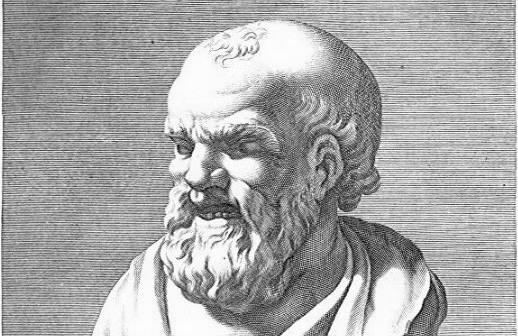
Diagoras of Melos was an ancient Greek poet, thinker, and philosopher who lived during the 5th century BCE. He was born on the island of Melos and became famous throughout Greece for his bold criticism of religion and traditional beliefs about the gods. Because of his ideas, many people called him “the atheist,” making him one of the earliest known critics of organized religion in Western history.
Although only fragments of his life and teachings survive today, Diagoras remains an important figure in the history of philosophy, free thought, and skepticism.
Early Life and Background
Diagoras was believed to have been born around 460 BCE on the island of Melos. During this period, Greece was filled with religious traditions, temples, sacrifices, and myths about powerful gods such as Zeus and Athena. Religion was deeply connected to politics and daily life.
Melos later came into conflict with Athens during the Peloponnesian War. Some historical accounts suggest that Diagoras may have been affected by these political struggles, which possibly influenced his critical views about society and religion.
Criticism of Religion
Diagoras became widely known for questioning the existence and power of the Greek gods. Ancient stories claim that he mocked religious rituals and challenged the belief that gods controlled human fate.
One famous legend says that someone showed him offerings dedicated by people who survived storms at sea, claiming these proved the gods protected believers. Diagoras reportedly replied by asking where the offerings from those who drowned were. This response reflected his skeptical and logical approach to religion.
Because of his outspoken views, many Athenians considered his ideas dangerous. He was accused of impiety — disrespect toward the gods — which was a serious offense in ancient Greece.
Exile from Athens
The government of Athens eventually charged Diagoras with impiety. Historical sources say a reward was offered for his capture after he fled the city. To avoid punishment, he escaped Athens and spent the rest of his life in exile.
His persecution shows how controversial free-thinking ideas could be in the ancient world. At a time when religion shaped law and culture, openly criticizing the gods was seen as a threat to society itself.
Influence on Philosophy
Even though most of his writings have been lost, Diagoras became a symbol of intellectual courage and skepticism. Later philosophers and historians remembered him as a thinker who dared to challenge accepted beliefs.
His ideas can be connected to later traditions of rational inquiry, scientific thinking, and freedom of expression. While modern atheism is very different from ancient Greek skepticism, Diagoras is often remembered as one of the earliest figures associated with questioning religion openly.
Legacy
Today, Diagoras of Melos is remembered as a controversial but important historical figure. Some see him as a pioneer of free thought, while others view him as a rebel against traditional values.
His story highlights an enduring theme in human history: the struggle between established belief systems and the freedom to question them. More than two thousand years later, Diagoras continues to represent intellectual independence and fearless inquiry.