Our Location
304 North Cardinal St.
Dorchester Center, MA 02124

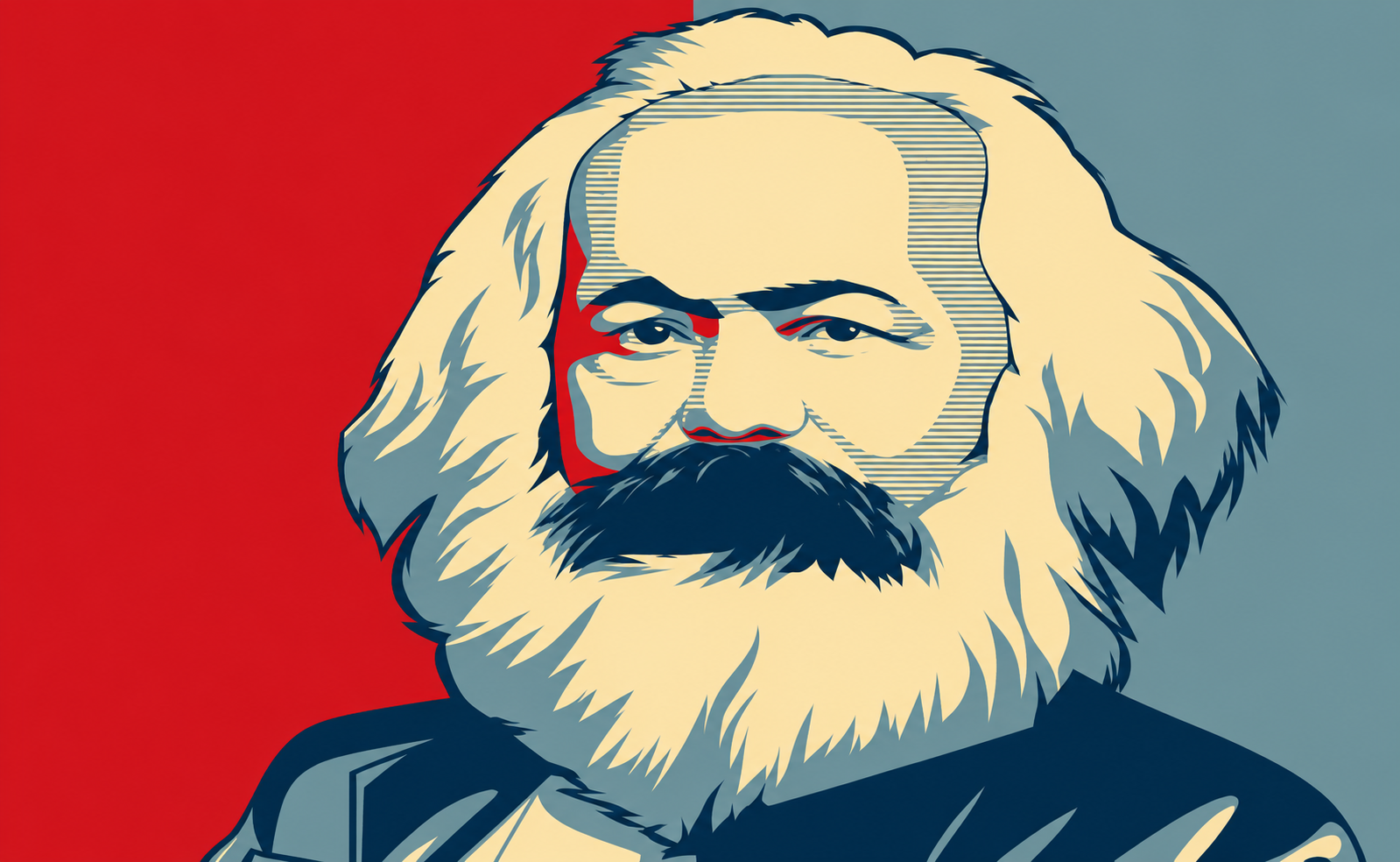
Karl Marx was one of the most significant individuals in history and is known for developing the concept of communism, class struggle, and criticism of capitalism. Many of his other theories and ideas were also highly controversial and quite famous. The idea he made about religion gained a lot of fame and controversy throughout.

According to Marx religion was inseparable from economy and society; religion, on Marx’s account, was merely a spiritual and faith-based experience, but rather a social phenomenon that arises from human misery and oppression. His phrase:
“Religion is the opium of the people.”
is perhaps one of the most talked about quotes in history.
Marx lived in 19th century Europe when the industrial revolution had just begun. Gigantic factories were mushrooming throughout the continent but the workers who actually worked and created wealth suffered a lot. Poverty, child labour and extreme inequality were prevalent throughout the continent and Marx viewed the situation and deduced that the rich factory owners were enjoying all the wealth, workers suffered and religion made people accept the hardships they were enduring. Religion, according to Marx, helped a great deal in keeping the status quo.

When Marx commented that religion is the opium of the people, he didn’t mean that religion is evil.opium was commonly used as a painkiller in the 19th century and so Marx believed religion provided a dose of painkiller by dulling emotional pain caused due to suffering. According to Marx: religion serves to comfort the oppressed, religion offers the hope of reward after death and thus gives the deprived a hope of enjoying pleasure. According to Marx’s ideology, this kept people complacent and unwilling to oppose the powerful.
Marx considered that society consists of two main classes-The Bourgeoisie which are the rich ruling class and the proletariat which consists of the workers. He observed that religion often served the interests of the ruling class and that religious institutions often aligned themselves with the governments of monarchs and powerful rulers. According to Marx, religion can lead to the following:

Marx believed that true liberation would only be possible after all economic oppression is dismantled.
Marx believed in a theory called the theory of historical materialism. Marx asserted that it is the economic and material circumstances of history that dictate human culture, politics and religion. Therefore, all these concepts of humankind rise out of social conditions and that if a society were to come that was equitable and devoid of classes, then, according to Marx, religion too would cease to exist.
The ideas and concept of religion presented by Marx have attracted some criticisms from various philosophers and scholars.

Some opponents of Marx claim that religion has historically served as a tool to combat the oppression and suffering of people, citing examples such as Martin Luther King Jr. And Mahatma Gandhi whose religious beliefs inspired them to achieve peace and equality.
Other opponents argue that religion can not be defined simply as a consequence of class struggle or economic status due to the role that spirituality and morality play in the phenomenon. They believe that faith is often tied with cultures and personal experiences which makes them much more complex than Marx attributed.
Marx’s prognostication of the eventual vanishing of religion in modern civilization proved itself to be inaccurate. Religion remains a persistent phenomenon even in the developed parts of the world today.
Despite some limitations, Marx’s theory regarding religion was vastly influential particularly among followers of communism and socialism. It influenced:

The countries that followed Marxist ideologies, the Soviet Union and China, discouraged or prevented religious activities in politics.
Marx regarded religion primarily as a social phenomenon, a product of human suffering induced by economic inequality. He believed that religion served as both a source of solace for the oppressed and a tool for maintaining the prevailing social order.
While many disagree with the conclusions he drew, Marx’s assessment of religion is arguably one of the most debated contributions of philosophy, sociology and politics. His ideas still influence the modern day discussion of faith, society, economics and power structures around the world.
