Our Location
304 North Cardinal St.
Dorchester Center, MA 02124

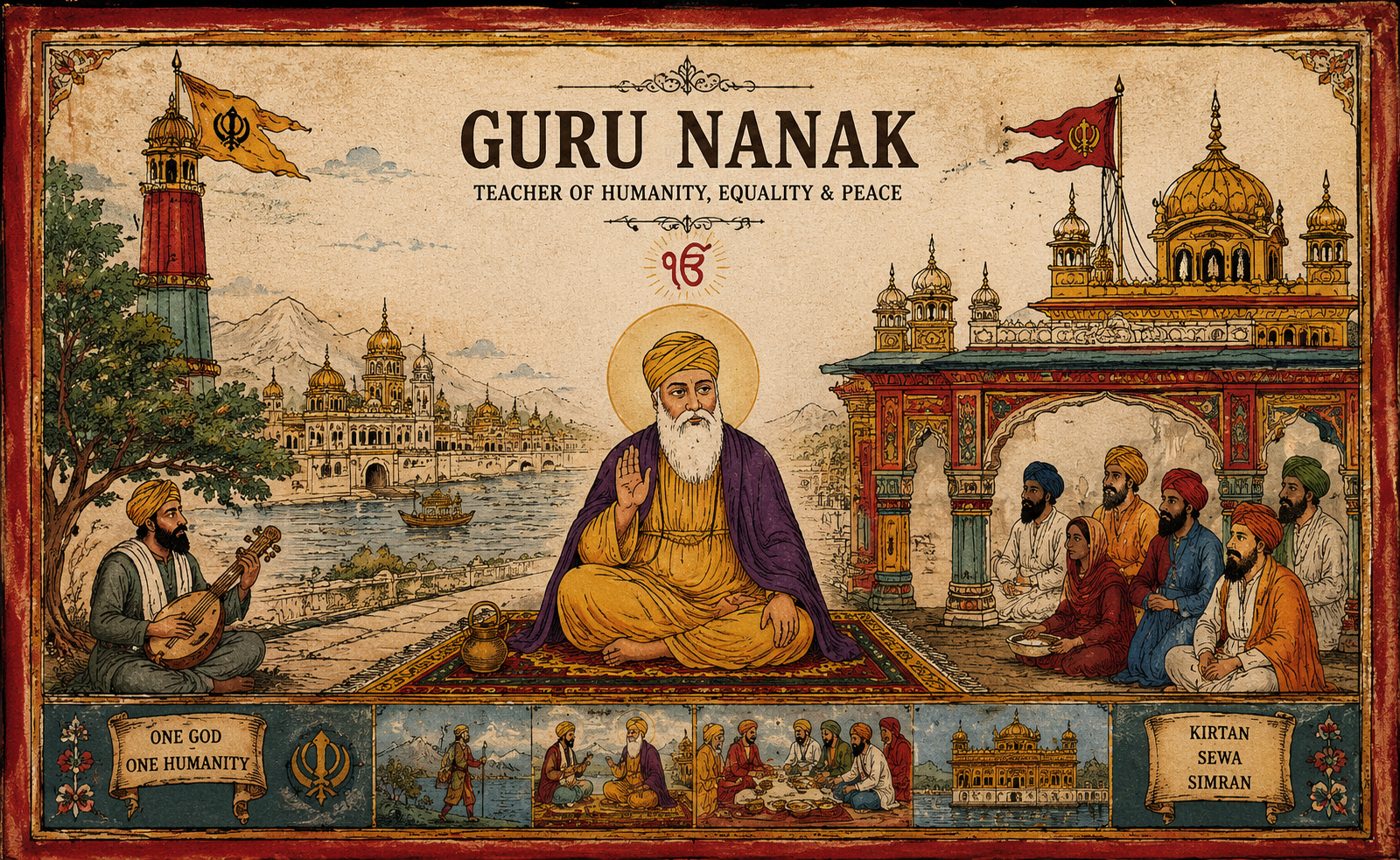
Guru Nanak — The Spiritual Teacher of Peace and Equality
Guru Nanak stands out as one of history’s most influential spiritual leaders. He founded Sikhism and earned the respect of millions around the globe. At his core, Guru Nanak preached equality, kindness, honesty, and devotion to one God. He challenged discrimination, opposed social injustice, and tried to bridge religious divides.

He was born in a world swept by conflict and inequality, yet he spent his life spreading a message of peace and humanity. That message still resonates.
Early Life
Guru Nanak was born April 15, 1469, in Rai Bhoi di Talwandi—now called Nankana Sahib. His father, Mehta Kalu, worked as a village accountant, and his mother, Mata Tripta, cared for the family.
Even as a child, Guru Nanak showed unusual wisdom and deep spirituality. He didn’t just quietly accept traditions or rituals—he questioned them. He chose to meditate and support others, instead of seeking wealth or power. Teachers saw his intelligence and spiritual depth early on; he often left them amazed.
His Teachings
Guru Nanak insisted there’s only one God, and that this God created everyone equal. He rejected all sorts of discrimination—by caste, religion, gender, or status.
He emphasized a few core ideas:

Believe in one God.
Treat everyone equally.
Earn your living honestly.
Help those in need.
Remember God through prayer and meditation.
Live truthfully and humbly.
He summed up his philosophy with three phrases: Naam Japna (remember God), Kirat Karni (work honestly), and Vand Chakna (share with others). These are the foundation of Sikh beliefs.
Travels and Spreading His Message
Guru Nanak didn’t stay put. He traveled thousands of kilometers, spreading his message of peace and unity—these journeys were called “Udasis.

He went all over India, Tibet, Arabia, Persia, and Sri Lanka. Along the way, he talked with people from every religion and culture. He spoke out against superstition, corruption, and injustice, and pushed for love and understanding.
His loyal companion Bhai Mardana traveled everywhere with him, playing music while Guru Nanak sang spiritual hymns.
Birth of Sikhism
Over time, Guru Nanak’s teachings attracted followers. These early Sikhs believed in equality, service, and devotion to God. After Guru Nanak, nine more Gurus carried on his teachings, eventually compiling them into Sikhism’s sacred book, the Guru Granth Sahib.
Sikhism went on to become a major world religion and it still inspires millions.
Guru Nanak’s Fight for Equality
Guru Nanak’s insistence on equality was groundbreaking. He fiercely opposed the caste system and any discrimination against women or the poor. He created the tradition of “Langar”—a free, community kitchen where everyone sits and eats together, no matter their background. Sikh temples worldwide keep this tradition alive.
Guru Nanak’s Legacy
Guru Nanak passed away in 1539, but his teachings have never faded. His message of peace, truth, and humanity still inspires people everywhere.

Every year, millions celebrate Guru Nanak Gurpurab with prayers, music, charity, and service. For many, places like Gurdwara Janam Asthan, Kartarpur Sahib, and the Golden Temple are sacred reminders of his life.
Conclusion
Guru Nanak was more than a religious leader—he championed humanity, equality, and peace. His teachings call people to live honestly, help others, and respect everyone.
Even after 500 years, Guru Nanak’s wisdom keeps guiding people toward compassion, unity, and a deeper spiritual understanding.
